
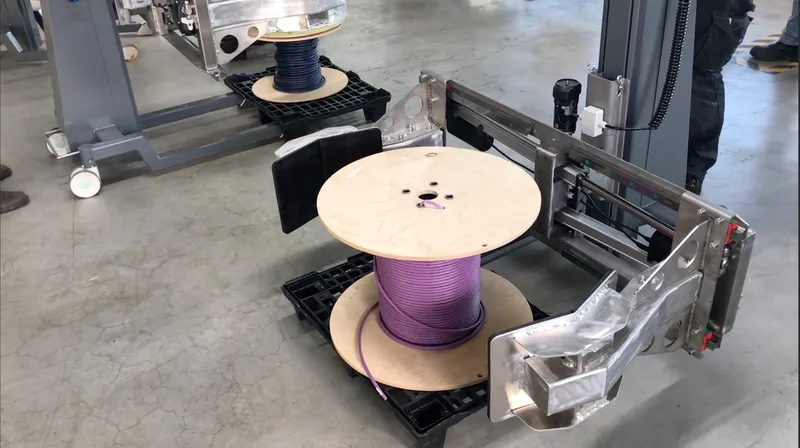
The drum determines the gripper
Cable drums vary in diameter, weight, flange material, winding, and core. Workstations vary as well. Some drums stand freely on a pallet, while others are stored close together in a rack. Some only need to be moved; others must unwind during the process.
There is therefore no single correct gripping method. The ezzLIFT lifting aid can work with different load handling attachments. The choice depends on which surfaces are strong and accessible and which motion follows the pick-up.
| Gripping method | Strength | Point to consider |
|---|---|---|
| side grip on winding | fast pick-up and straightforward turning | clamping force acts on the cable |
| external flange grip | cable remains free of clamping force | flange must be accessible and strong enough |
| center-hole pick-up | high capacity and possible unwinding | center hole must be accessible |
| top access to winding | works in narrow rack aisles | also applies lateral pressure to cable |
1. Side grip on the cable winding
Two jaws approach the winding horizontally and clamp the drum between them. The flange does not carry the load. The attachment can be positioned quickly and, depending on its design, turn the drum between horizontal and vertical orientations.
This method suits robust cables with a firm, even winding. A different attachment should be considered for pressure-sensitive insulation or loose winding. The drum cannot unwind freely while the jaws remain on the cable.
2. External grip on the flange
Several gripping fingers surround the flange and engage underneath its edge. The cable remains free of clamping pressure. The drum can self-center during pick-up and can be reoriented between horizontal and vertical positions.
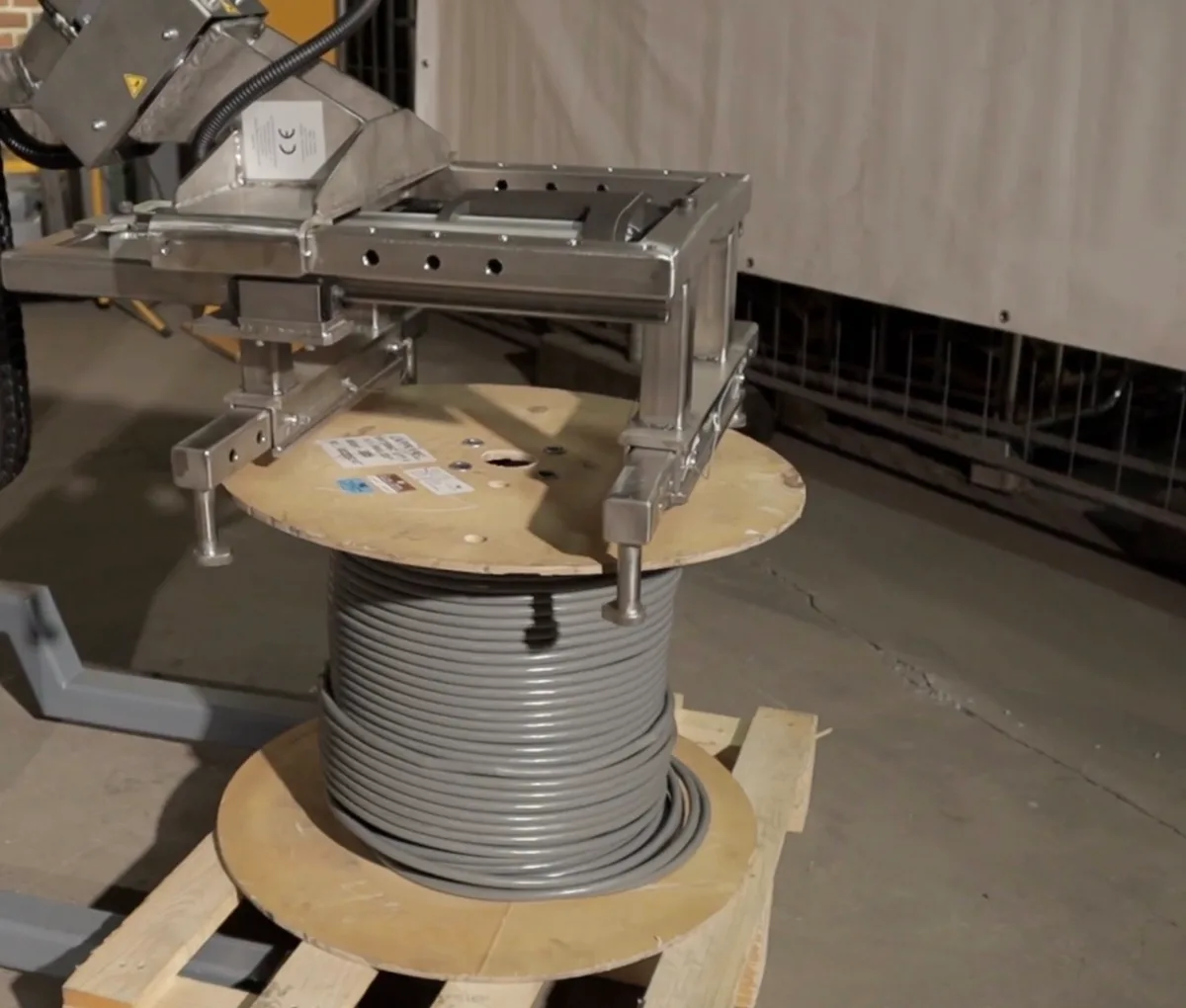
Different mechanisms can raise the drum. A winch keeps the construction simple. A powered turning mechanism guides the motion more closely. In both cases, the flange must safely carry the load and remain accessible to the gripping fingers.
3. Pick-up through the center hole
A mandrel or bar passes through the central opening. The load is transferred through the hub, the drum's structurally strong area. This approach is particularly useful for high weights and transfers to shaft-mounted stations.
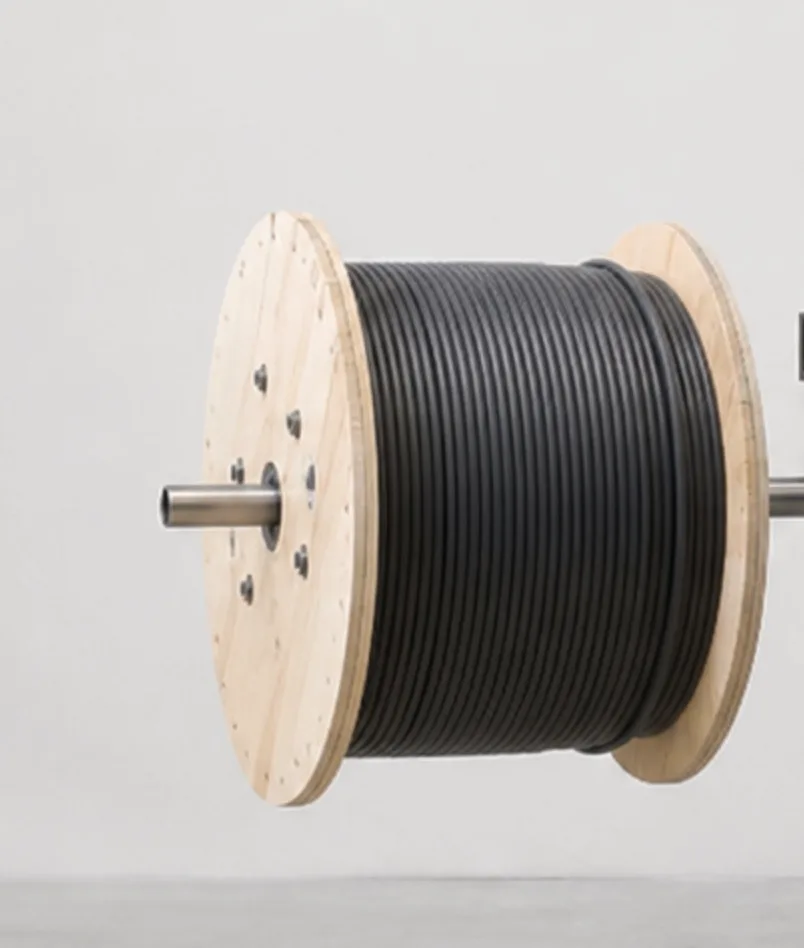
When the drum rotates freely on the mandrel, cable can be paid off or wound without regripping. The center hole must be accessible, and the storage or machine infrastructure must support this transfer method.
4. Grip the winding from above
Narrow rack aisles often leave no room for a gripper approaching from the side. Two jaws can instead enter the space between the flanges from above and clamp the winding laterally.
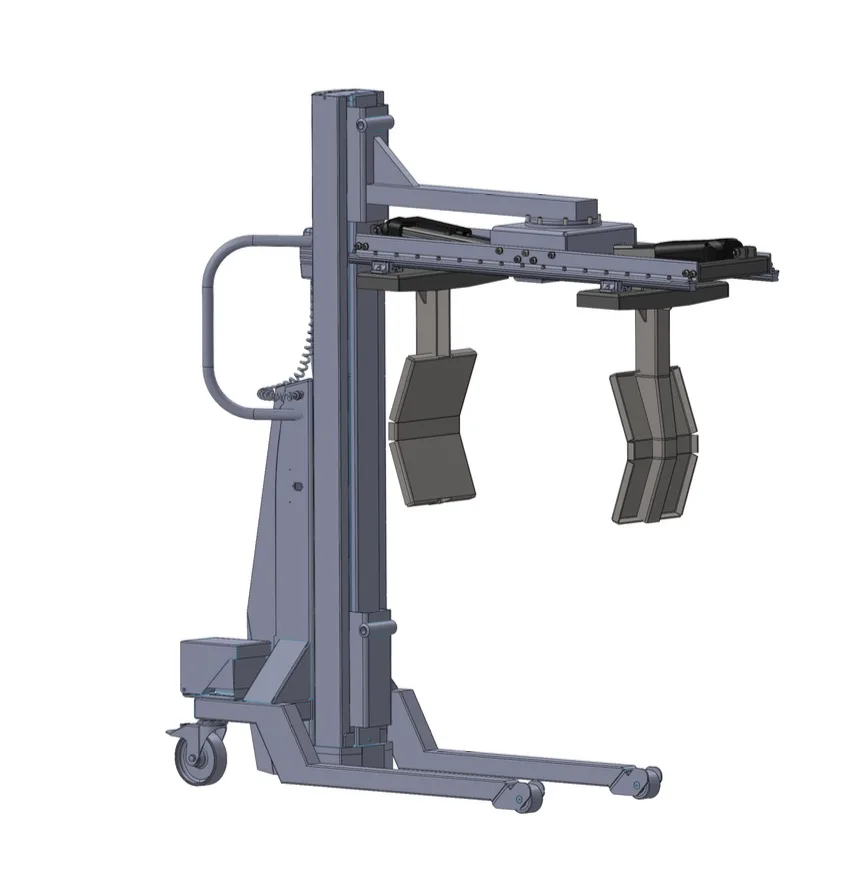
The upright drum can be picked up and turned around its vertical axis. As with the side grip, the cable and winding must tolerate the required clamping force.
Select from the real handling task
Product name and maximum weight are not enough for selection. The review requires:
- Smallest and largest drum diameter
- Weight range and center of gravity
- Flange material and geometry
- Core and center-hole diameter
- Cable type and permitted clamping force
- Staging in a rack or on a pallet
- Required turning, reorientation, or unwinding motion
Our article about lifting and turning heavy cable drums covers the complete workflow. This comparison adds the decision between different load handling attachments.
The best gripping method considers drum, cable, and storage layout together. BHT reviews the application with an original drum or reliable load data, then engineers ezzLIFT and its gripper around those conditions.