
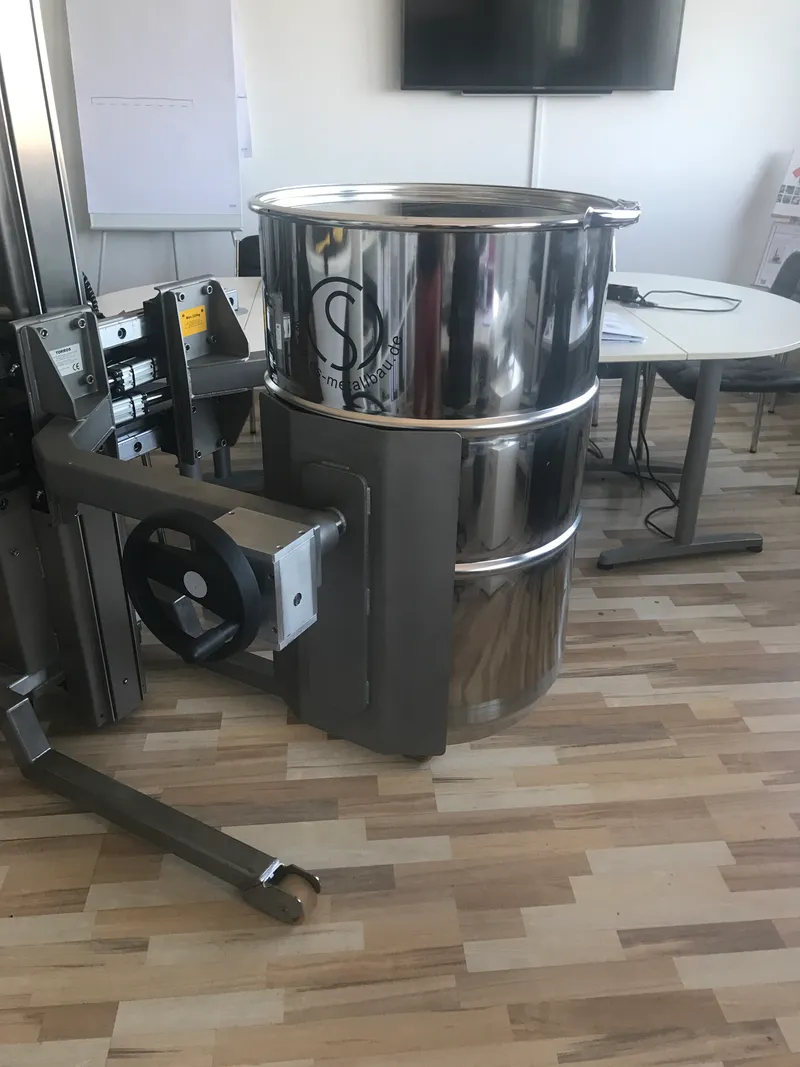
Drum handling involves more than lifting
Drums are heavy, bulky, and often safe to grip only at defined surfaces. Chemical, plastics, and pharmaceutical production add another requirement: the entire workstation may be classified as a hazardous ATEX area.
A suitable handling system therefore has to solve two tasks together. It guides the drum through the process and is engineered for the specified ATEX zone. Moving a standard device into a hazardous area after the fact is not sufficient.
The motion sequence determines the solution
Product selection starts with the real workflow. A drum may simply need to move between two points. It may also need to be picked up from the floor, turned, positioned above a mixer, and emptied at a controlled rate. Each step changes the gripping point, center of gravity, and required working envelope.
Typical tasks include:
- Picking up drums from a pallet or staging point
- Moving containers between workstations
- Aligning drums or turning them around their axis
- Emptying contents into a process vessel
- Returning empty containers to a safe position
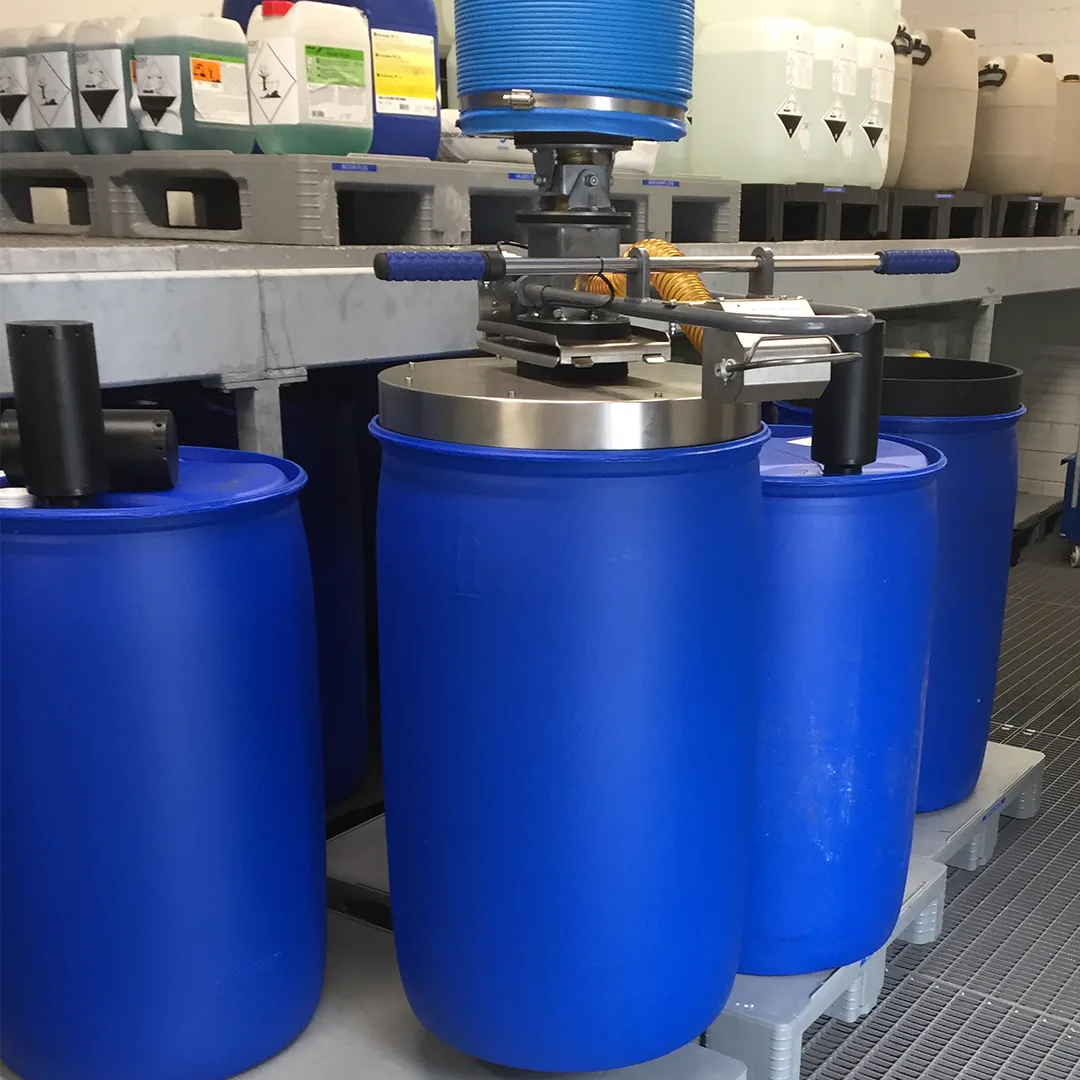
For mobile applications, the ezzLIFT lifting aid handles lifting, transport, and positioning. Its load handling attachment is engineered around the drum geometry, rim, lid, and required motion. Where the surface is sufficiently airtight, the ezzFAST vacuum lifter can provide a fast pick-up method.
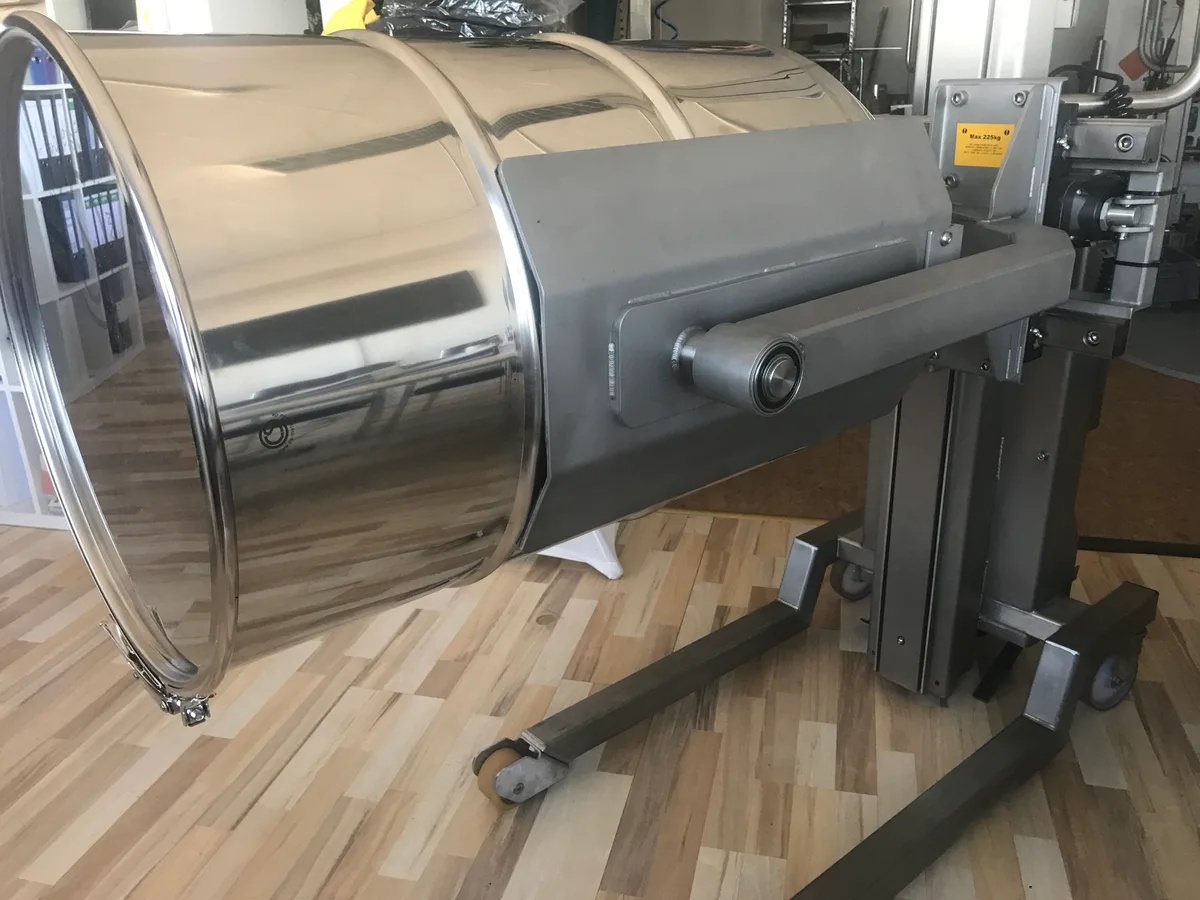
The gripper must match the drum
Drums cannot all be picked up in the same way. A suction cup needs a suitable, sufficiently airtight contact surface. A mechanical gripper can engage the rim, the shell, or dedicated structural features. With sensitive surfaces, clamping force and contact material must be considered.
Key design data include:
- Drum material and surface
- Diameter, height, and weight
- Center of gravity when partly filled
- Lid, rim, and available gripping surfaces
- Required turning or tilting angle
- Pick-up and set-down positions
These factors determine whether vacuum, positive gripping, or a combination is appropriate. Where drum sizes vary, the adjustment method must also remain safe and practical during daily operation.
ATEX applies to the complete system
The gripper is only one part of a hazardous-area assessment. Lifting device, crane, energy supply, hoses, and conductive connections all form part of the system design. Depending on the zone and application, static-dissipative materials, grounding connections, and pneumatic power may be required.
The final configuration follows the operator's risk assessment. BHT matches the handling system to the zone, substance, container, and process. Our article about a vacuum lifter in a hazardous area provides additional technical background.
Five inputs for a project review
A sound first assessment starts with a small set of specific data:
- Which drums need to be handled?
- How much do full and partly emptied containers weigh?
- Which motions must the system perform?
- Which ATEX zone and substance group apply at the workstation?
- How much space is available between pick-up and destination?
These inputs define a handling concept that considers safety, productivity, and ergonomics together. The decisive factor is not one device in isolation, but the coordinated combination of support structure, lifting technology, and load handling attachment.