The process does not end with lifting
Requirements change from one step to the next in food, cosmetics, and pharmaceutical production. A closed sack needs a different gripping method than an open lined carton. Dosing adds quantity control. During a roll change, core geometry, installation height, and machine access determine the solution.
A sound design therefore considers more than weight. Container, motion path, hygiene zone, and destination process belong together. The following four tasks show how much handling can vary in hygienic areas and cleanrooms.
1. Feed closed containers
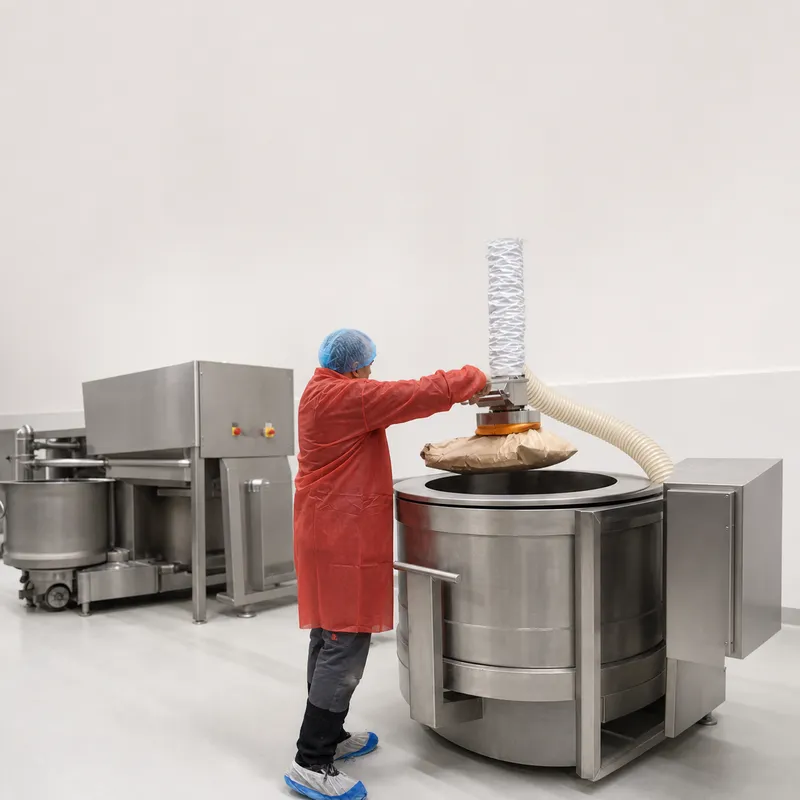
Sacks containing flour, sugar, starch, milk powder, or pharmaceutical excipients often need to be positioned above a mixer opening. Manual handling combines three unfavorable actions: lifting, reaching forward, and holding the load.
The ezzFAST vacuum lifter picks up a compatible closed pack at its surface. The system carries the weight while the operator guides the sack to the mixer and positions it above the inlet.
Packaging surface, pick-up point, destination height, and cleaning requirements are reviewed during design. A woven sack, coated paper sack, and airtight plastic pack can each require a different suction cup.
2. Stabilize opened containers
After the first withdrawal, the container behaves differently. Remaining material can shift, a carton may deform, and its liner can lose its defined position. Regripping close to an exposed product creates additional contact points.
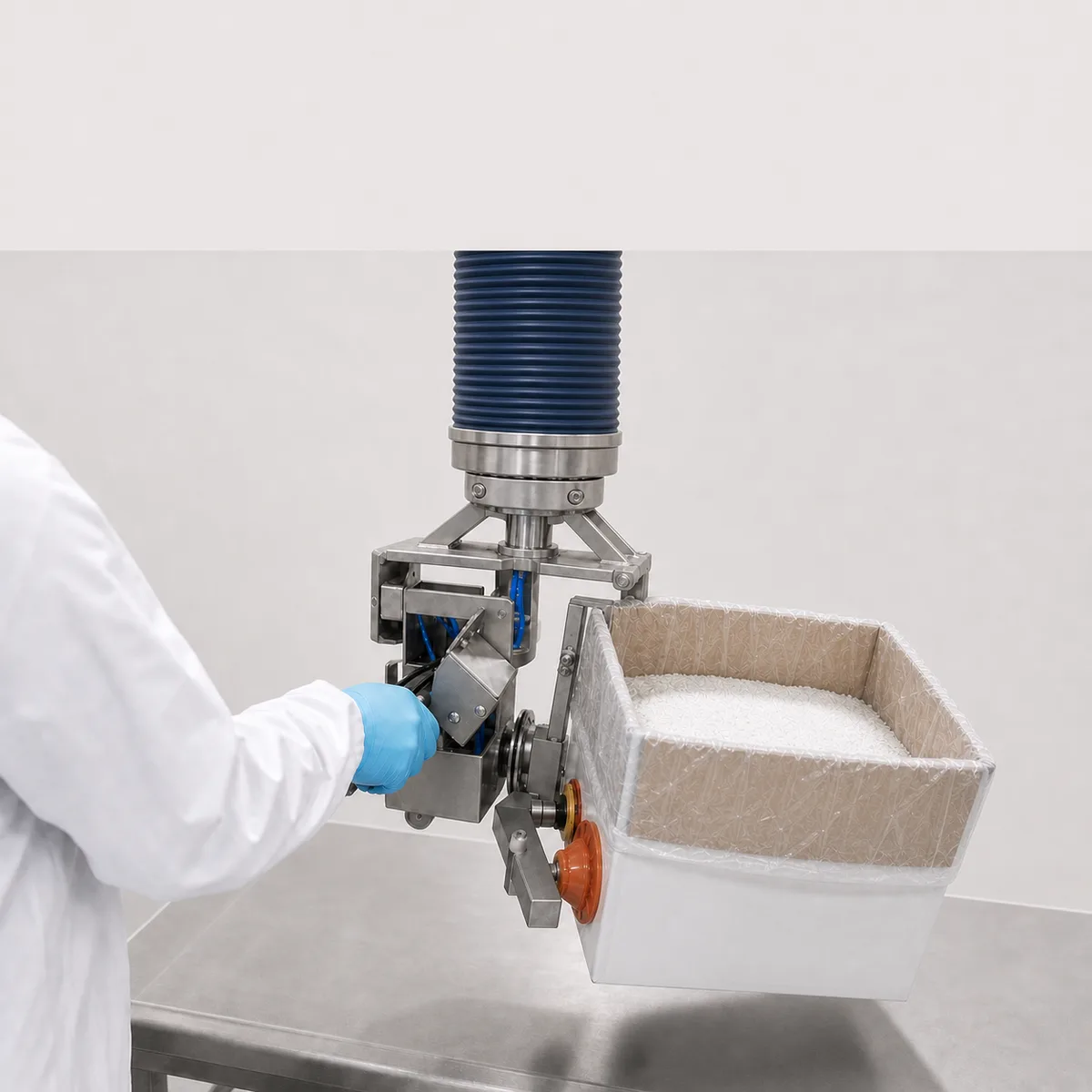
A gripping and turning tool engages defined points on the packaging. It stabilizes the open carton and guides it into the required position. Geometry, fill level, liner, and tilt angle determine the construction.
3. Weigh and empty at a controlled rate
Lifting, positioning, and quantity control are often treated as separate dosing steps. A mobile ezzLIFT lifting aid can keep the container engaged throughout the process. An integrated weight display measures the weight reduction during emptying.
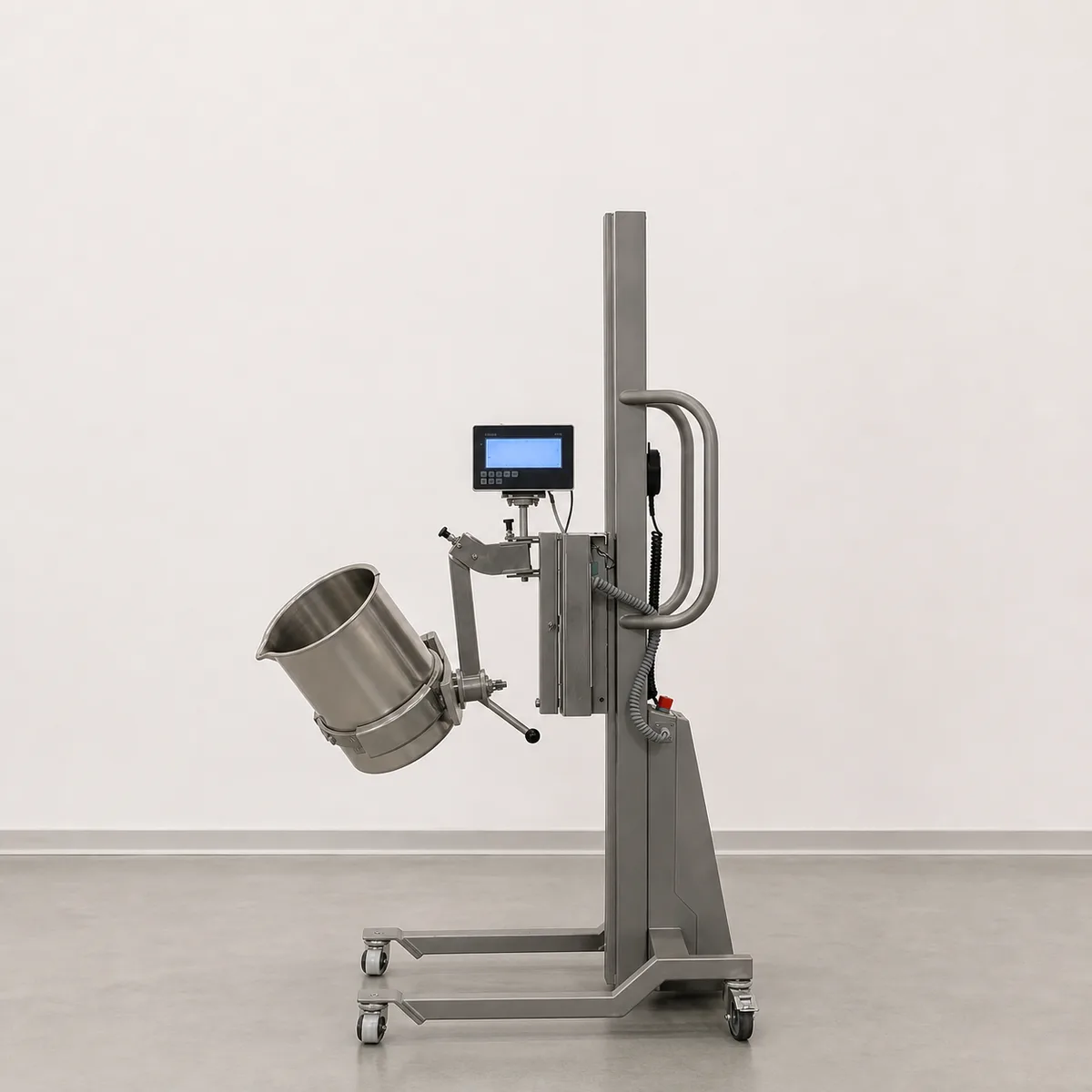
Whether this method fits the process depends on the required dosing accuracy, container geometry, and medium. Powders, granules, and liquids each need suitable holding and tilting tools. Process requirements and the weighing concept are reviewed together.
4. Change material rolls at packaging machines
Film, label stock, and other rolls must be moved to the machine interface and aligned precisely. The final inches are often the most demanding. Installation height, core, and shaft have to line up, while space beside the machine may be limited.
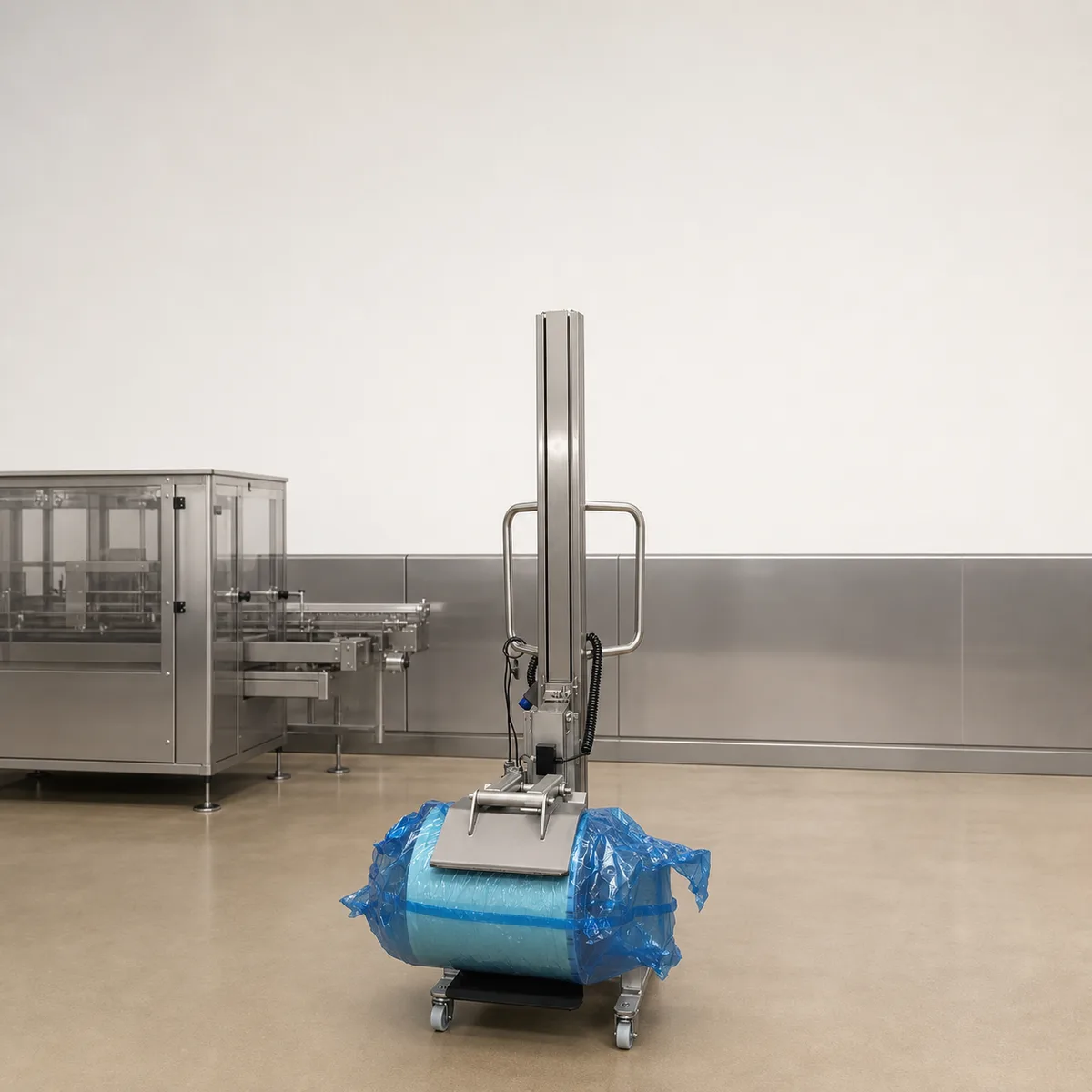
ezzLIFT picks up the roll at staging, moves it to the machine, and aligns it with the interface. Stainless steel or cleanroom-compatible configurations may be required, depending on the zone. Roll weight, dimensions, core, installation height, and travel path determine the attachment.
Shared design criteria
These four tasks use different gripping principles, but the planning questions are similar:
| Planning question | Effect on the solution |
|---|---|
| What is being handled? | determines gripper, suction cup, or platform |
| Is the container open? | affects stabilization and contact points |
| Which motion follows? | defines lifting, turning, and tilting functions |
| Which zone applies? | determines materials, surfaces, and cleaning |
| Where are start and destination? | defines working envelope and mobility |
| How is material dosed or checked? | integrates weighing and process control |
A hygienic configuration alone does not solve a handling task. Only the combination of load, attachment, device, and process creates a controlled sequence. BHT reviews these four levels using actual containers, the layout, and the cleaning concept.