The suction surface is only part of the task
A vacuum attachment needs a suitable contact surface and must hold the load throughout the intended movement. Long or bulky parts raise further questions: Where should the pick-up points be? How will the orientation change? And will the destination remain accessible?
The following videos show two different applications. They illustrate the selection criteria; the attachments shown are not universally interchangeable tools.
Pick up long parts with adjustable cup positions
For the long profile, the outer suction-cup position on the lifting beam is adjusted first. The part is then picked up, moved sideways and set down again. The distribution of pick-up points must suit its length, geometry and center of gravity.
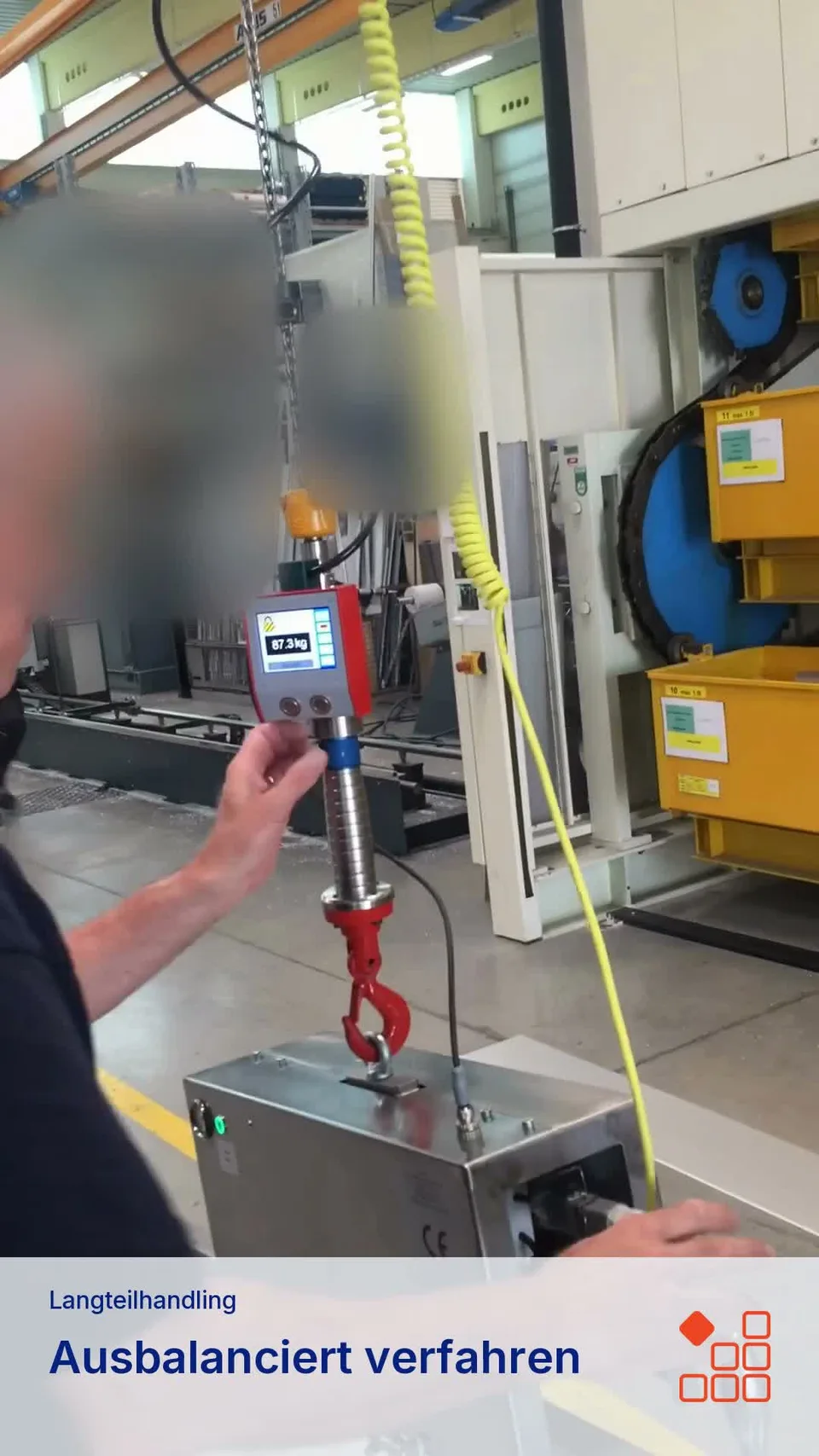
Handling long parts: from adjusting the suction cups to setting down
Loading this video allows data to be transferred to YouTube (Google). You can close it here or withdraw consent in the cookie preferences.
German audio with an AI-generated voice.
For a new application, the actual available contact areas matter. Cut-outs, uneven surfaces, coatings and different variants affect the cup arrangement. Part stiffness and permitted deflection also need to be assessed.
Grip radiators from the side and set them down on a pallet
For the radiator, the vacuum attachment engages the side surface. The lifting device guides the vertical movement; the operator adjusts the part's orientation and sets it down on the pallet. The gripper must suit both the contact surface and the required load orientation.
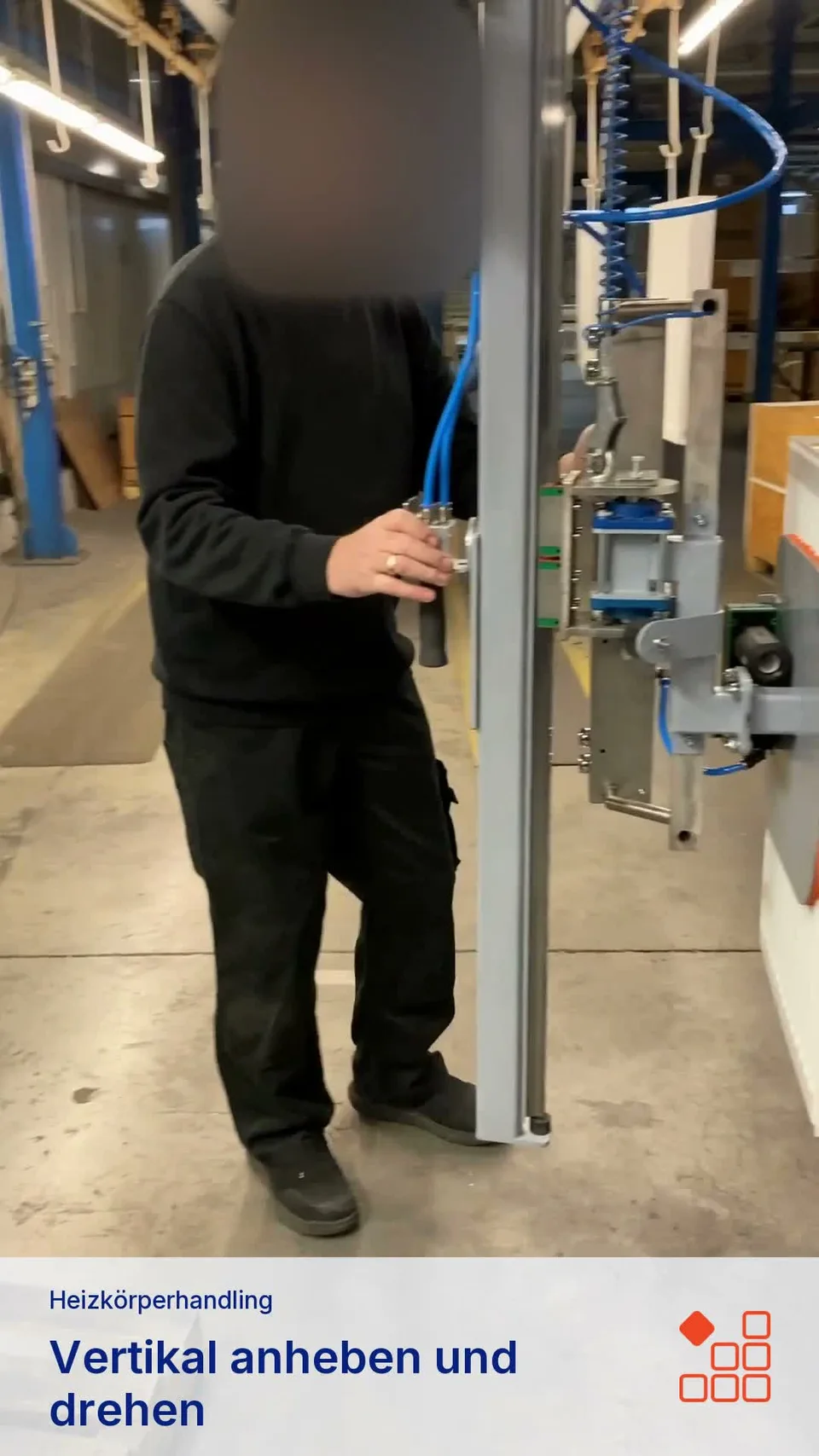
Lift a radiator with a vacuum attachment and place it on a pallet
Loading this video allows data to be transferred to YouTube (Google). You can close it here or withdraw consent in the cookie preferences.
German audio with an AI-generated voice.
For the movement to work at the workstation, the control handles must remain within reach and the pallet must be accessible. Alongside load weight, the design considers the center of gravity, gripping height and clearance for turning and release.
What information does the design require?
| Information | Relevance to handling |
|---|---|
| Weight and dimensions | Tool loading and required working envelope |
| Surface and material | Available suction areas and suitable cups |
| Center of gravity and stiffness | Position and spacing of pick-up points |
| Part variants | Adjustment range or required tool changes |
| Pick-up and set-down | Access, lift height and release clearance |
| Movement | Guided lifting, sideways transfer and required orientation |
The vacuum supply, monitoring and response to a fault must be engineered for the actual combination. The video alone does not establish an approved load capacity or general suitability for other surfaces.
From the part to a suitable solution
The attachment is selected together with the lifting device and support system. See the ezzFLOW balancer and ezzLINK crane systems for system information; selection follows your actual handling task. Further applications are listed under workpieces and special goods.
Describe the part, its surface, pick-up, movement and set-down. Weight, dimensions and variants help us assess the gripping approach.